
Tackling theme

My students stared at the test question:
“What is the theme and how does each text address that theme differently?”
This question is from a previous state test. Like the one they will take in 3 weeks, this test asks students to read two passages and write an essay comparing and contrasting them. Considering how a theme is addressed differently in separate texts is complex, but my students’ blank stares and chorus of “What is a theme?” stopped me in my tracks.
My fifth graders can talk at length about the lessons texts teach us and how those lessons apply to their lives yet they struggled to access the terminology to answer the question. So I did what I typically do in these situations (after I panic) I took a step back, sat with my notebook and made a plan. The result? A theme intensive consisting of scaffolds to support students’ comprehension of this difficult concept.
Scaffold 1: “Theme board” with general themes we see in texts.
We revisited some favorite picture books, short films, and poems, articulated themes in each and wrote them on a piece of chart paper. Then we wrote the text’s title on post-its and placed them beside the theme.
Now we add both themes and titles to new and existing themes on the board each time we read a poem, picture books, article and test passage or view a film.
We discuss orally and in writing how the text teaches this theme.
We make themes relevant to our lives by discussing: How does this theme apply/ or not apply to my life? Is it a window or mirror and what I can learn from it.
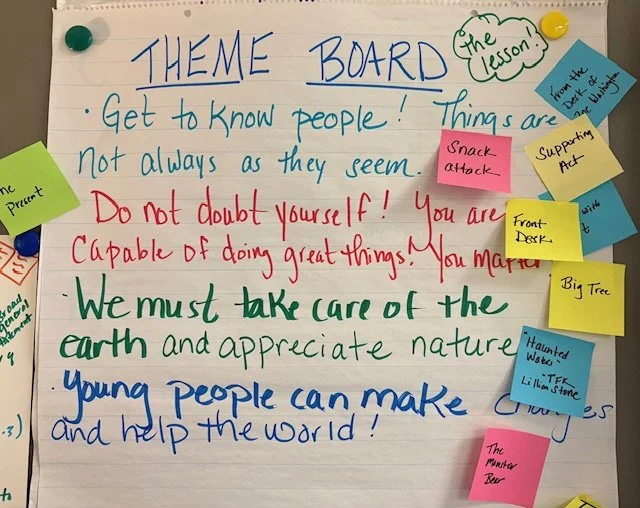
Scaffold 2: “Theme board” with specific texts and the many themes they teach.
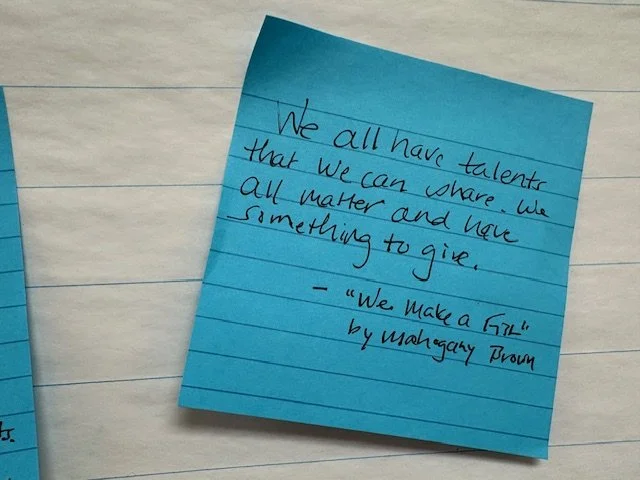
The standards ask that students identify more than one theme in a text so we took larger post- its and listed multiple themes each text teaches.
We read texts together, students turn and talk to identify themes. They refer to the theme board pictured above as a scaffold, if needed.
Students share the themes they attribute to the text and we write them on large post- it notes.
Students answer the following question in writing: How does the theme apply (or not) to my life? Is the text a window or mirror and what I can learn from it?
Students share their responses in partners. groups or whole class.
*** Note: transitioning from oral to written response scaffolds student short answer and essay writing.
Transition back to writing about theme: our original task.
Once students understood theme, they had the confidence and knowledge to go back to that question on the practice test and write their essay. They referred to another familiar teaching chart, explaining CER- Claim, Example, Response, to help them name the theme, provide examples from the text and respond to how their evidence supports their claim. While they worked, I conferred with them and looked on. If they needed more support, I pulled them in a small group to practice these steps.
The Results
It is so tempting to forge ahead in moments of struggle, but I find that taking a step back, investing time and offering supports pays off. Yes, higher test scores demonstrate the effectiveness of this work, but more importantly, students learn that texts have the power to teach life lessons that we take with us beyond the page.