
The Traveling Teacher in Granada, seville and Madrid, Spain!
Seville and Granada have been on my “to be traveled” list since I studied abroad in college. Back in the days before the internet, we relied on word of mouth when planning European adventures. During long weekends or vacations we all scattered to various European cities and came back with stories and recommendations. I don’t recall who recommended these cities in Southern Spain but they have been on my radar for nearly 30 years and I am delighted to have finally made my way there.
Due to the intense heat of the summer, we opted to spend spring break in Spain. My partner, Stu and I flew to Madrid and took the 3 hour train ride to Granada. Since sleep deprivation and jet lag make the first day in Europe a blur, we tend to power through and catch a train to another destination. It helps us avoid the temptation of crashing in a hotel room.
A note about planning
I love this part of the travel experience. Typically, I search for Youtube videos to watch while I walk on the treadmill at the gym. I found these videos by World Wild Hearts to be the most helpful.
GRANADA, SPAIN | 10 Incredible Things To Do In & Around Granada
SEVILLE, SPAIN | 10 Awesome Things To Do In & Around Seville (Sevilla)
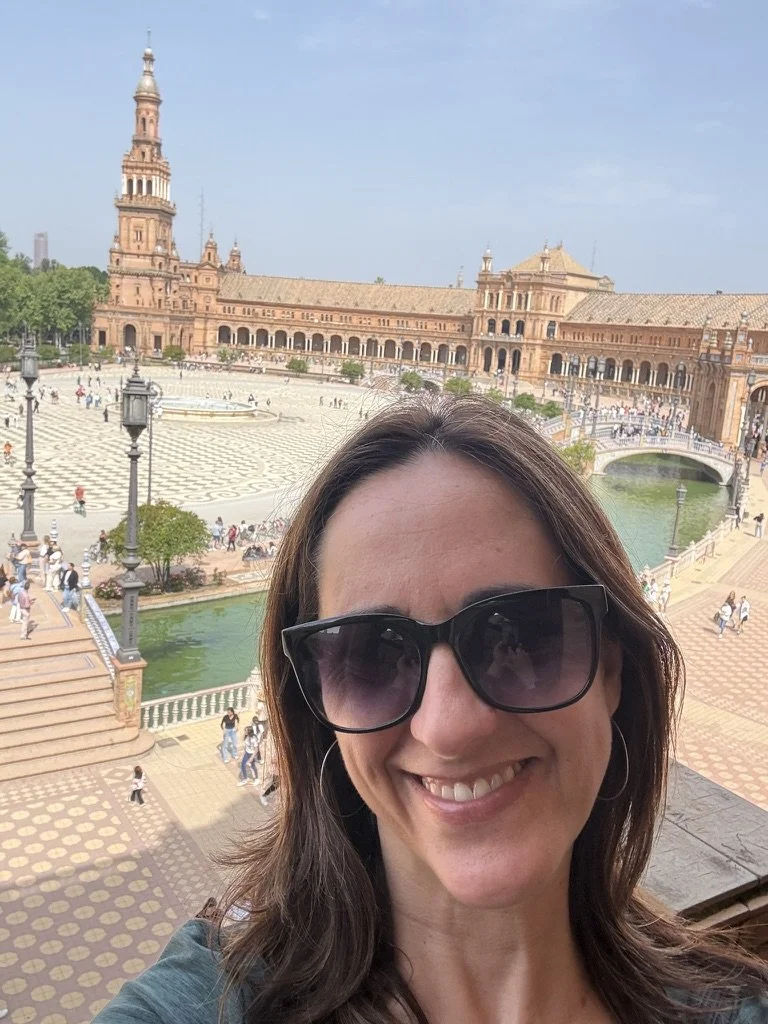
At the Place d’Espana in stunning Seville!
Granada
I love this city. Its history is evidenced by its Moorish architecture blended with Renaissance and Baroque styles when the Christians took over. We stayed in the central part of town, a short walk to the Albacin (my favorite neighborhood) and a short taxi ride to the Alhambra and the Sacramonte neighborhood.
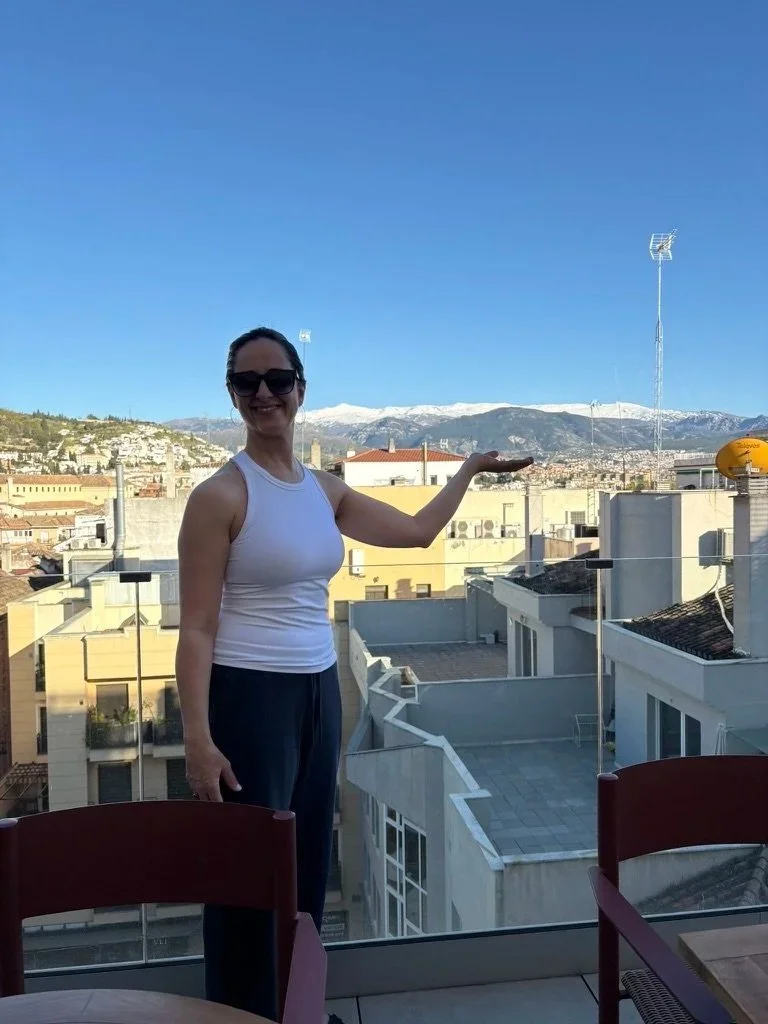
We arrived at the beautiful Melia Granada hotel after a long train ride from Madrid. The staff greeted us with a glass of cava and views of the Sierra Nevada Mountains on the 6th floor. Later we enjoyed their “happy hour” complete with generous snacks and drinks. Having spent the past 24 hours cooped up inside planes and trains, we opted to sit on the terrace and take in views of the mountains and the Alhambra.
Easter!
We arrived the day before Easter. As with other Spanish cities, Semana Santa (Holy Week) is a huge deal in Granada. There are up to 30 processions all ending at the Granada Cathedral. As a result, the street in front of our hotel was closed. Bleachers sat along both sides of the street (it took days to take it all down). We were able to catch a glimpse of the procession from our hotel window and then rushed down to watch it on street level. Marching bands (one of children, later another with adult musicians), locals carrying statues (that I saw resting in the Cathedral a few days later). People dressed in traditional robes and head pieces. It was a delight to witness this cultural and religious ritual.
Bells ringing on Easter morning.
The Easter procession that passed by our hotel.
Walking tour
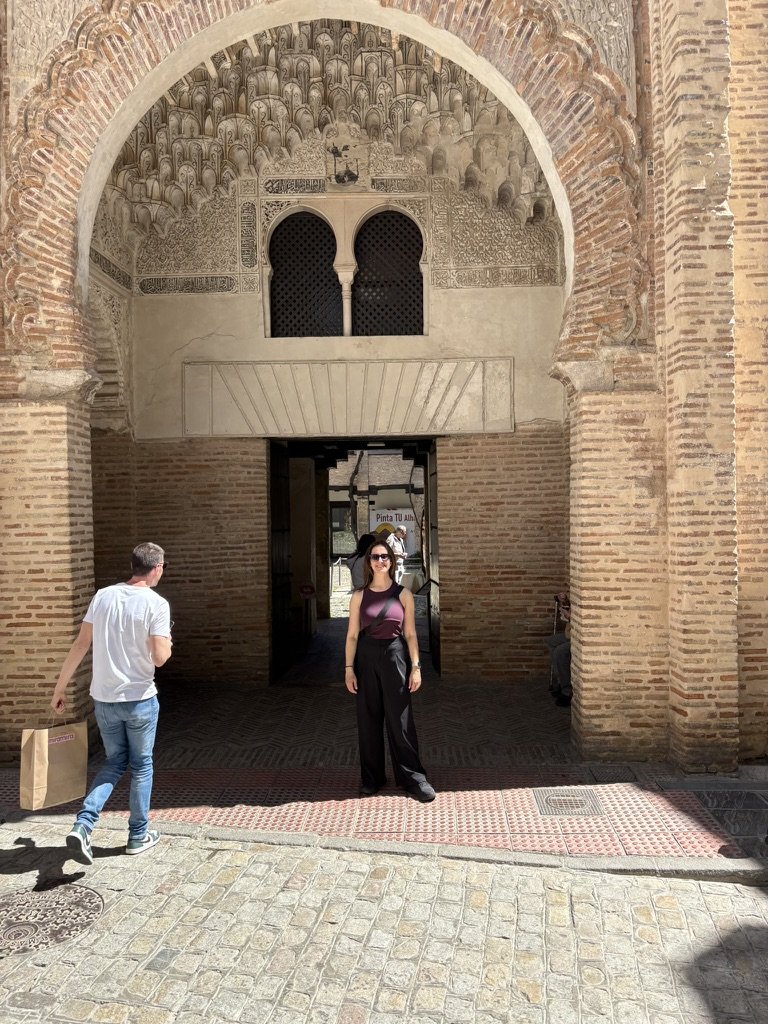
After watching the procession, we headed off on a walking tour of Granada. This is something we enjoy doing together. Stu download the "Enchanting Granada Walking Tour” by Ben Barclay. It was great. We connected my earbuds to his phone so that we could both listen and we set off. We started in the town center, walked along the beautiful rambling river (or stream) along the Carrera de Darro, wandered up and around the Albacin neighborhood and ended by the cathedral.
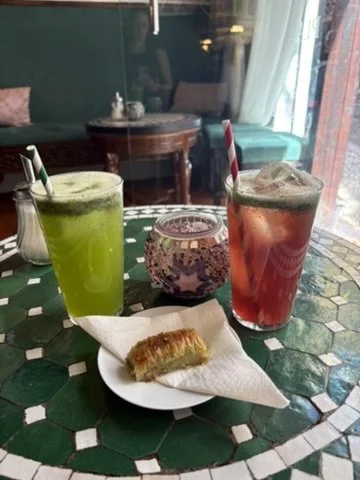
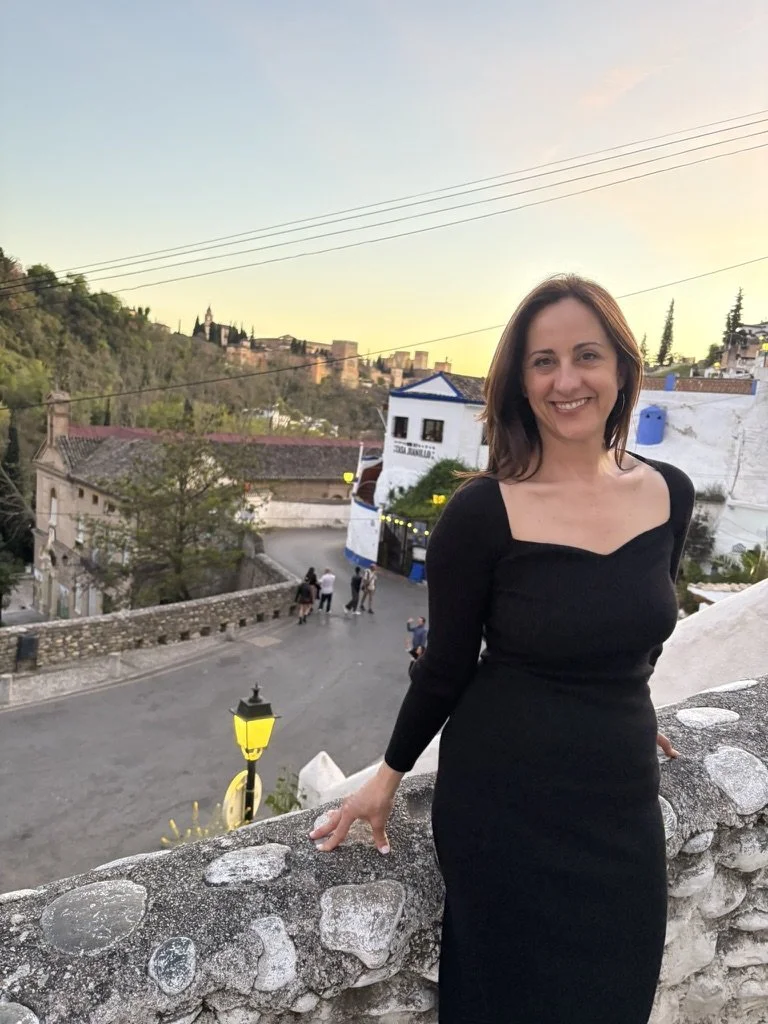
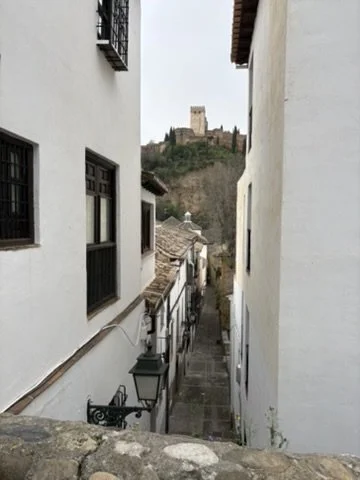
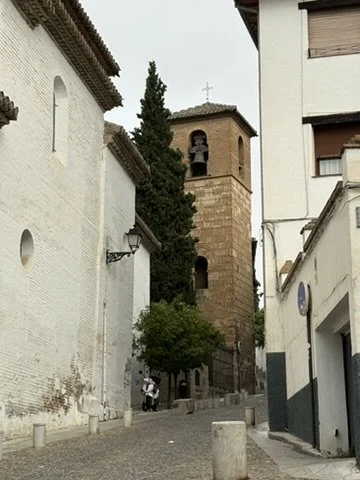
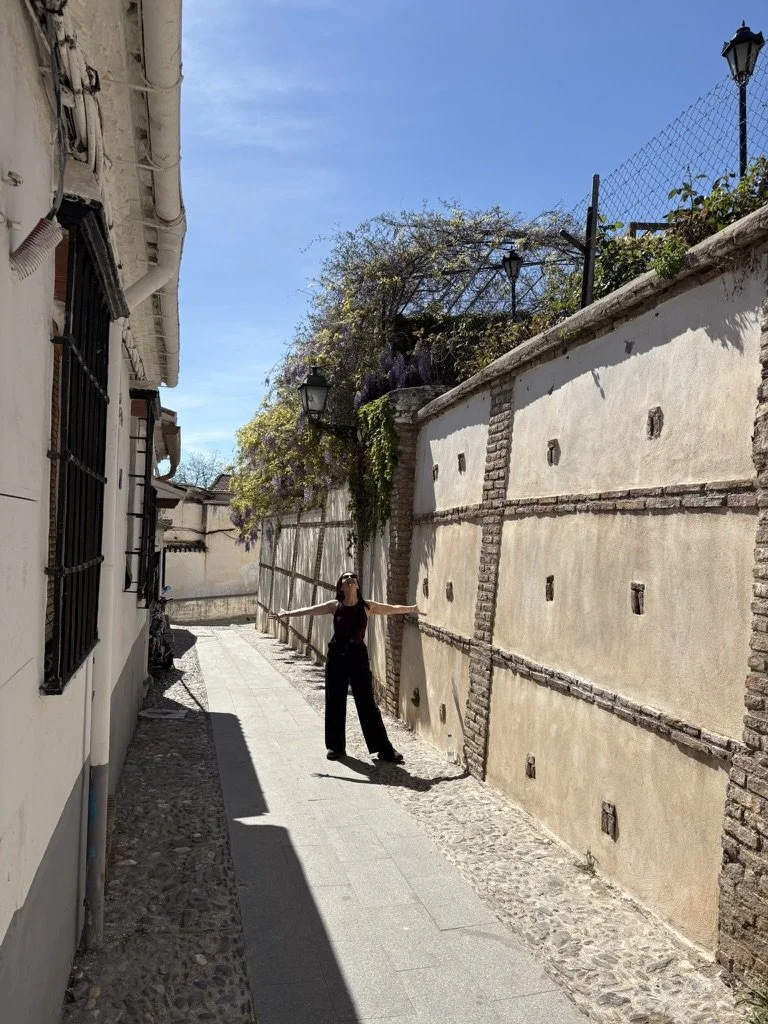
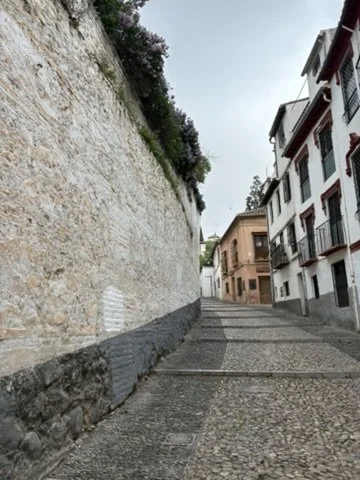
The Albacin is magical with its white washed buildings and narrow streets curving up and down hills. While there are famous miradors (or viewpoints of the Alhambra), we found that views of the palace are at every corner. In fact, I am not sure if we went to any of the established viewpoints. We stopped at one of the many tea houses on the way down, called Orinta Tea Room (complete with low tables, cushions and hookahs) and enjoyed delicious iced teas and a savory crepe with chicken and cinnamon. I returned to wander around the Albacin the next day before leaving Granada.
Flamenco in Sacramonte
I wanted the experience of seeing a show in a cave where flemenco originated. Our seats were right at the front of the stage which concerned me at first but ended up being just fine. Our hotel arranged this showing. I was impressed by the way the dancers stomped their feet (think tap dancing on steroids). Considering that I mostly wear sneakers these days, I couldn’t imagine the toll this took on their feet! The speed, power and passion with which they executed their movements was awe inspiring. I decided against taking pictures and video because I wanted to respect the experience as I would any other performance. No judgement on those who did record it, that is just my dancer identity following the strict “no photography and video” rule.
The Alhambra followed by the Hamam Spa: A day to delight in the senses
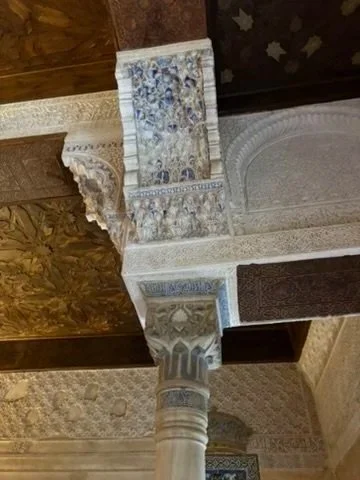
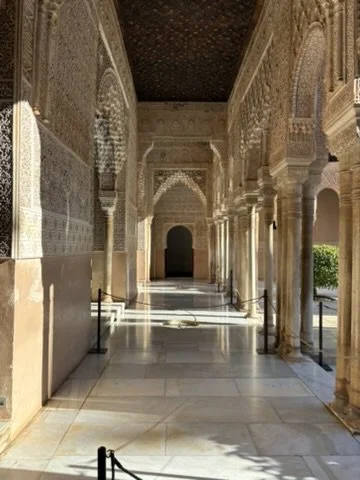
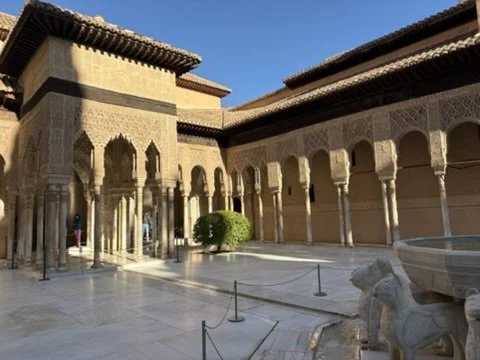
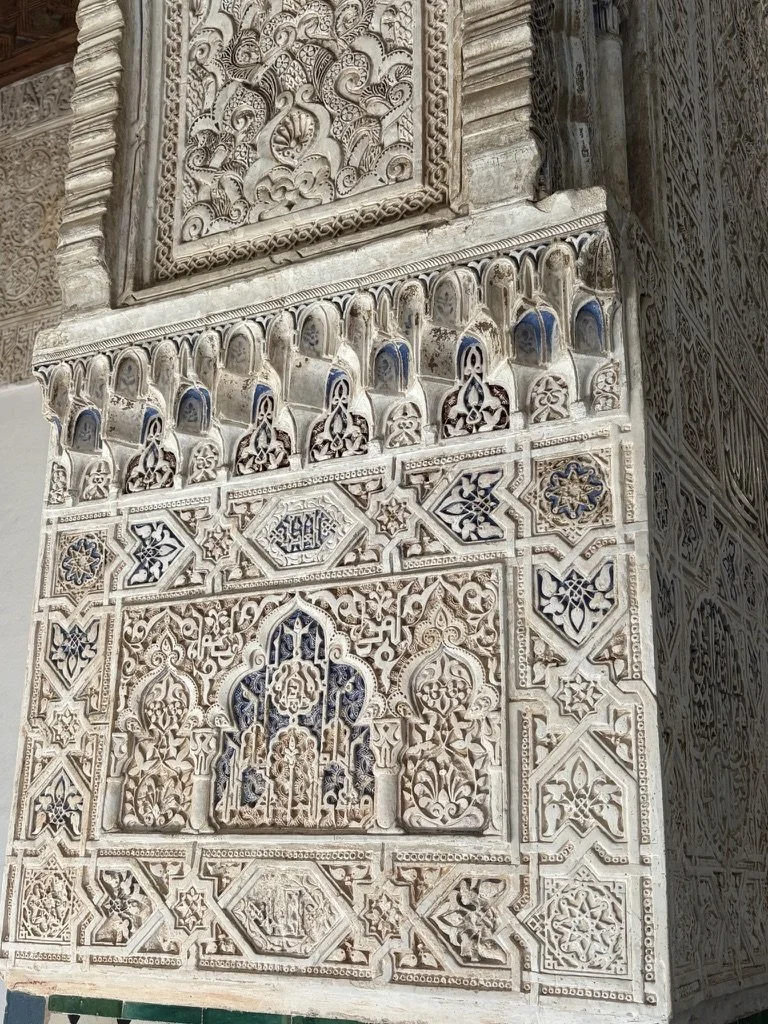
The intricate details and mathematical and geometric precision of the Moorish designs of Palace and gardens are amazing. The Alhambra, a palace of the Sultan, was a small city. There are the Nasrid palaces (my favorite part) as well as later additions by Charles V, fortified walls, and the Generalife gardens.
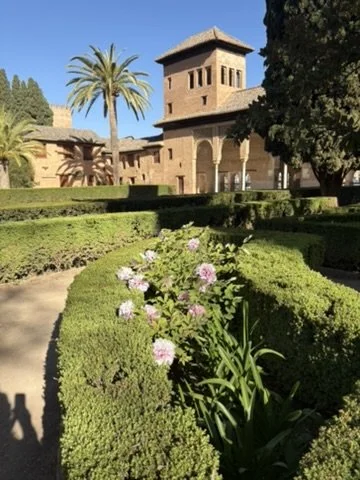
The courtyards and gardens are truly a sensory experience. In Islamic culture, water represents purity, life and paradise therefore courtyards and gardens are filled with fountains. The engineering behind them is a marvel.
I had a head cold, which took a turn for the worse the night before, so that slowed me down. I rallied to get to the Alhambra in time for our 9:00 am entrance but we arrived 30 min late for our entry ticket due to Monday morning traffic. While I had read about the risk of being turned away for arriving after the entry ticket time, we entered without issue. That said, I am not sure if we would have been so lucky if we had visited at a busier time. Travelers tip: be sure to factor in traffic and allow extra time to get to the Alhambra. There are shuttles to take you there but you can also easily hail a taxi like we did.
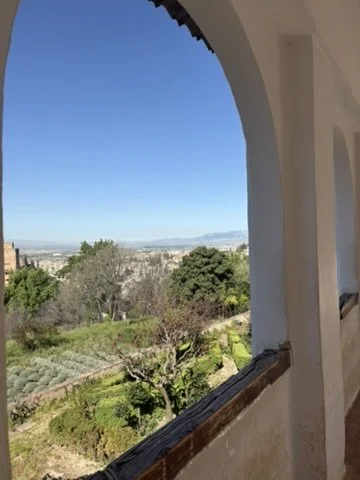
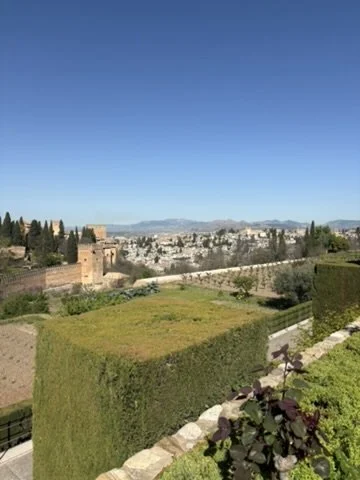
Back to my cold; that plus a poor night’s sleep meant that I had to take things easy. After the palaces, I meditated in the terraced gardens. Stu headed home and I continued to the Generalfe gardens (the Sultan’s retreat) , a good 10 minute walk from the palace. They are incredible. I was so grateful to the chairs scattered throughout the grounds because I was able to sit in the sun and really take in my surroundings. I soaked in the sounds of trickling water and the birds chirping, and the scent of wisteria, jasmine, lilacs, and peonies in full bloom.
On being sick on vacation: this is one of my top concerns for travel. I typically increase my daily dose of vitamin C a week before leaving to avoid it but this time, it hit me. I remember being incredibly ill over a Christmas in Florence during my junior year abroad. No doubt, my persistent cough kept my traveling companion up at night (sorry, Keel). But on the bright side, she pointed out that being sick slowed me down. I was a go- go-go kind of traveler who wanted to fit in as much as possible. At the time, she was a leisurely- sleep in type. My illness leveled out our travel styles (which fortunately 30 years later are much more aligned without illness). Nevertheless, I took that lesson from Keely and slowed down on this trip. Mediating in the Alhambra, in the sun, was just what the doctor ordered.
On a positive note, Europeans have great cold medicine. Just go into a pharmacy, tell the pharmacist your symptoms and they will give you what you need.
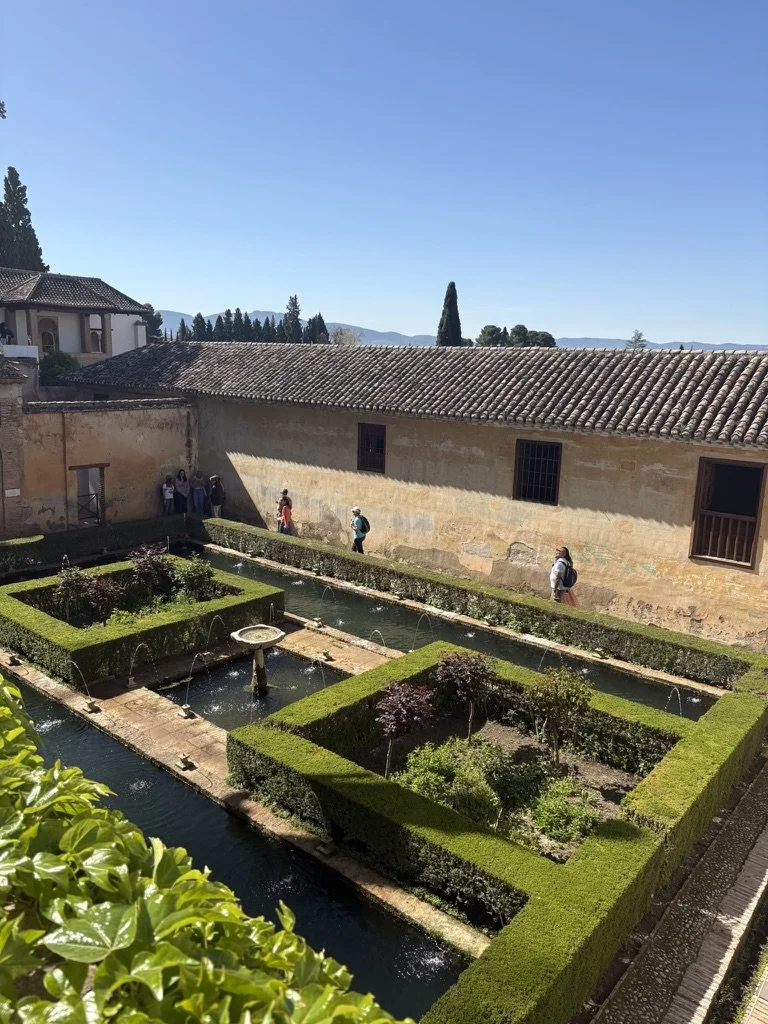
Hammam spa
Hammans are my new obsession. I went to one in Crete and now I am hooked. I describe them as Middle Eastern style spas based largely on water. As I learned during my Alhambra visit that morning, fountains and water sources are symbols of paradise (heavenly presence). The Hammam Al Andalus included several pools of various temperatures; hot, warm, cold (for a plunge) for a “water journey”. Stu and I moved between the pools as we waited for our services. I opted for a Kessa tradition where you lay on a table, and they pour water on you, followed by soap bubbles (the best way I can describe it is it feels like a blanket of soap) , and then body scrub. From there the massage therapist gave me a relaxation massage focusing on my upper body (my request).
The whole experience was incredibly sensory. Obviously, touch being key but also scent- you chose the scented oil for the massage I opted for one called , “Magic” inspired by lily pads symbolizing creativity and invention. I sipped rooibos chai after my session and enjoyed the dark lighting, intricate patterns of Moorish design and cave-like quality of rooms where the baths are situated. It was a divine experience
Seville
Seville, the capital city of the Andalusia region, is gorgeous and energetic. We stayed at the Quenercia de Seville about a 7 minute walk to the cathedral. The hotel receptionist greeted us with glasses of local sherry. We settled into our room, found a laundromat to drop off our clothing (we typically do this when we travel as it allows us to pack carry-on luggage and costs less than checking a large bag) and then headed out to explore. We found a tapas restaurant for dinner. More croquettes, local cheese and other dishes - this would not be the first time a waiter advised us to hold off from ordering too many dishes! It rained that afternoon and evening which made for a cozy dinner.
Casa Palacio de la Condesa de Lebrija
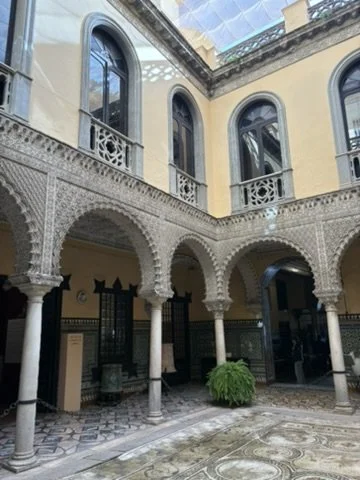
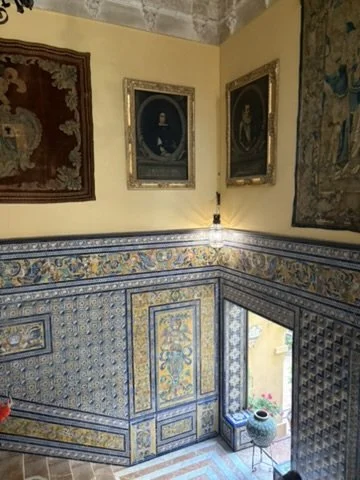
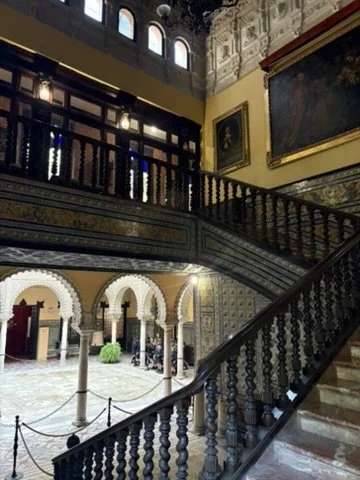
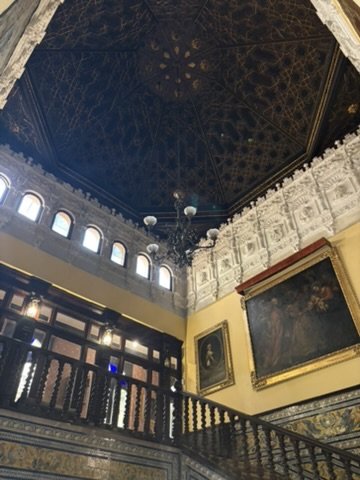
This former home of a countess was one of my favorite places in Seville! The Lebrija palace dates back to the 16th century and in 1901, the Countess bought and restored the family home. It is gorgeous - filled with classic Seville architectural design, intricate mosaics and a collection of paintings, sculptures and ancient Roman and Greeks remains. Your ticket includes access to the ground floor but to see the upper floor, you need to join a tour. There was one just starting when I arrived so I joined in. I enjoyed learning about the grand staircase, the origins of the mosaics on the wall and seeing the rooms where the family lived, worked and entertained. I highly recommend visiting this home. It is a short walk from the Cathedral and other central highlights, its small size makes it a nice addition to your day. Plus fewer crowds are a bonus! Learn more here.
Cathedral of Seville
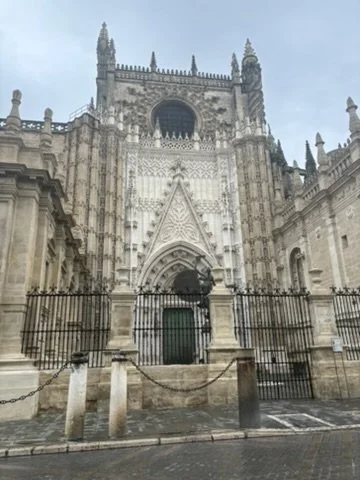
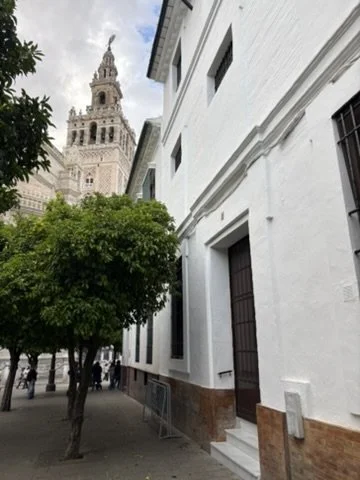
The cathedral is huge; the size of a New York City block! When the Christians drove the Moors out of Spain, they sadly demolished mosques and built cathedrals in their place. The Seville cathedral has remnants of the mosque (the bell tower, La Giralda, is a minaret which, with the exception of the top, is original) and the entrance to the courtyard. We climbed the tower. Rather than stairs, the engineers built ramps which allowed horses and donkeys to transport construction materials to the top. It also made for an easier and speedy climb. Afterwards we wandered around the cathedral. It is massive and broken up into different altars and sections. We tried following the audio guide but after a while, we gave up and just wandered around.
After the cathedral we did another audio guide and learned about the history of Seville as the center for the golden age of Spain. This is where Christopher Columbus (whose tomb is inside the cathedral) set off after King Ferdinand and Queen Isabel agreed to fund his trip in search of a passage to India. There is a cross outside of the cathedral which marks the place where explorers like Columbus returned to Spain with riches they stole from the “new world.” I have to admit that this history of Seville left me feeling uneasy. I didn’t see signs or evidence that the city acknowledges the darkness of this past and how these explorations impacted indigenous people.
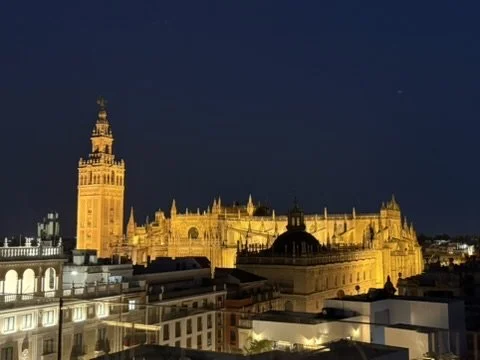
The Cathedral of Seville at night.
Santa Cruz District
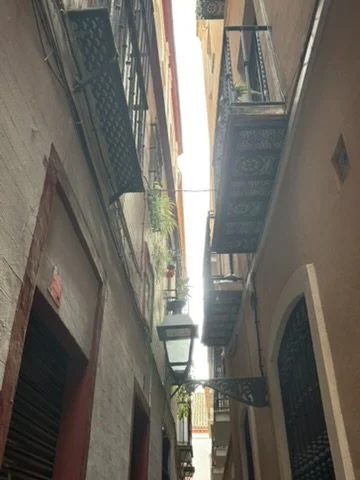
The district with narrow, winding streets is filled with character and charm. I explored the district twice: the first time I listened to Rick Steeves’ Seville walk as he pointed out significant streets and history and the second, I roamed freely along the cobblestone streets and narrow alleys. This neighborhood was the Jewish Quarter and again, has a dark past. A synagogue once stood in the Plaza de Santa Cruz but once the Christians took over, they destroyed it and built a church. Now just a cross remains. The neighborhood became a ghetto and place to segregate Jewish people from the rest of the city. They packed people in as evidenced by “kissing alley” where buildings are so close, you could stand in one and kiss someone in another (see photo below).
The more I travel, the more I feel the importance of being aware of a place's past. I know it is ubiquitous but certain places stay with me more than others and in this case, I couldn't stop thinking about the people who suffered persecution and loss during Spain’s “golden age.
Plaza d’Espana and Maria Louisa Park
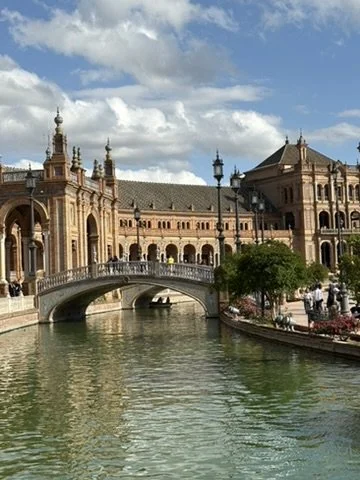
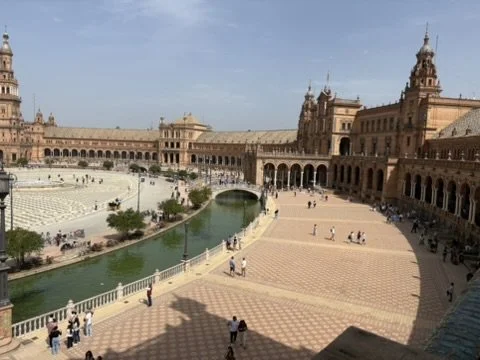
The Plaza d’Espana is perhaps one of the most common images that comes to mind when googling Seville. It is grand and graceful with its bridges crossing a canal, mosaics and tiled alcoves representing each of the provinces of Spain. It was fun watching visitor’s delight when they found the alcove for their home province and then of course, pose for photos.
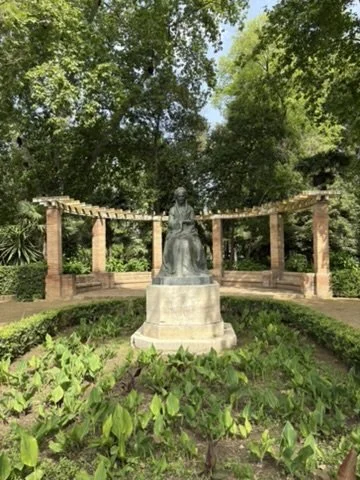
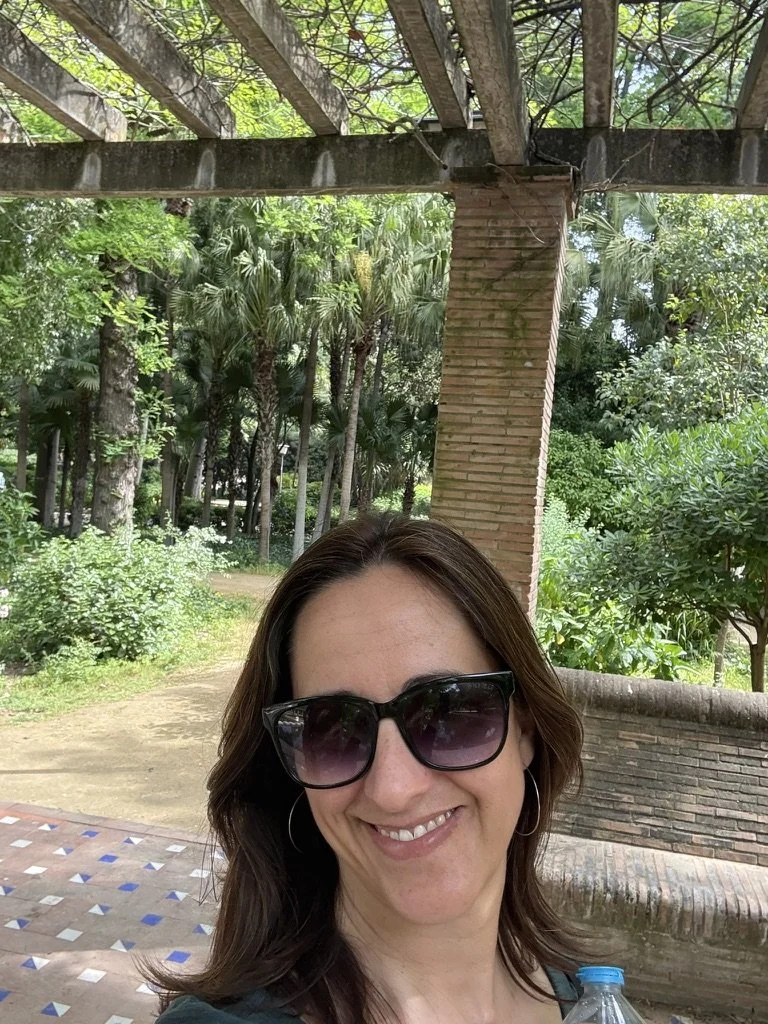
The first time I visited was at the end of a long day, I found a quiet alcove and basked in the sun for a time. I returned the next day to explore Maria Louisa park where the Plaza is located. It is stunning and well worth exploring.
Triana
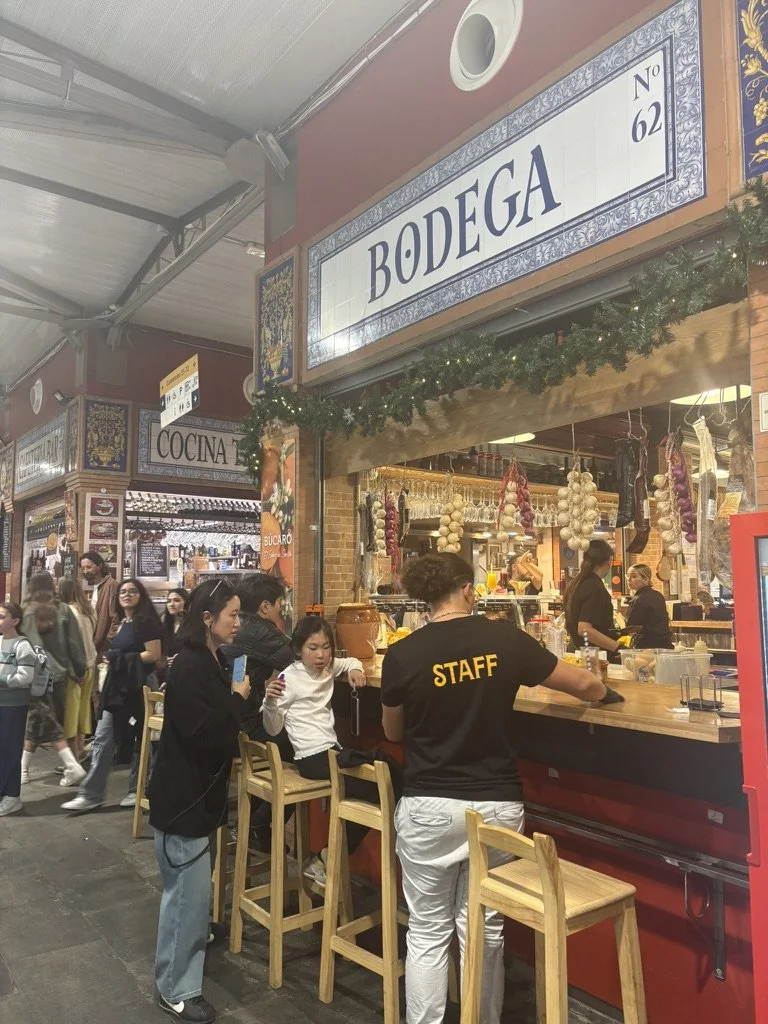
I wandered across the river to the Triana district. Triana is a quieter, less touristy neighborhood. I explored the Triana Market and had a light lunch in one of their tapas bars and then wandered along two main streets: Calle San Jacinto and Calle Betis. I stopped inside the Church of San Jacinto and enjoyed its quiet and intimacy; a stark contrast to the grand Cathedral.
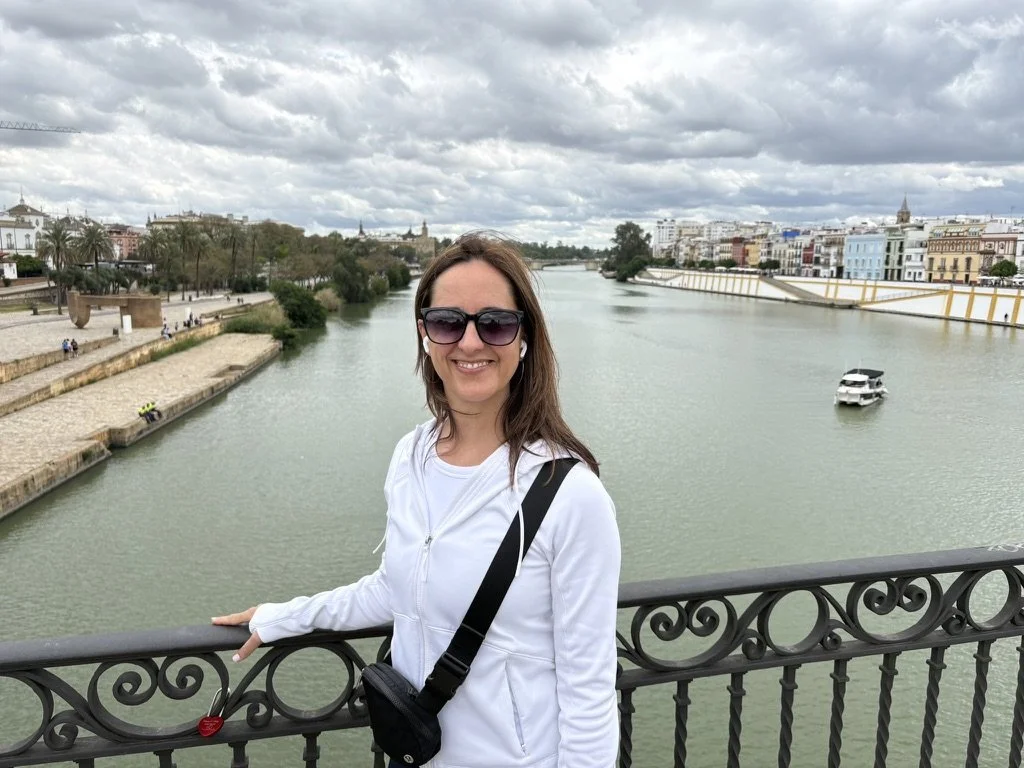
The bridge connecting the historic center to the Triana District.
Real Alcazar de Seville
Intricacy, brilliance and beauty of Moorish architecture and design make this palace spectacular! Like so many significant structures in this region it was originally Moorish (in this case a fort) and when the Christians took over Spain, they added Gothic style buildings. The Alcazar dates back to the 10th century and unlike the Nasrid palace of the Alhambra (which dates back to the 9th century and retains only blue from its original colors) a variety of colors remain intact. This palace is grand and impressive, in fact the King and Queen of Spain stay there when they are in town. We had a lot of fun roaming from room to room and getting lost in a maze of the gardens.
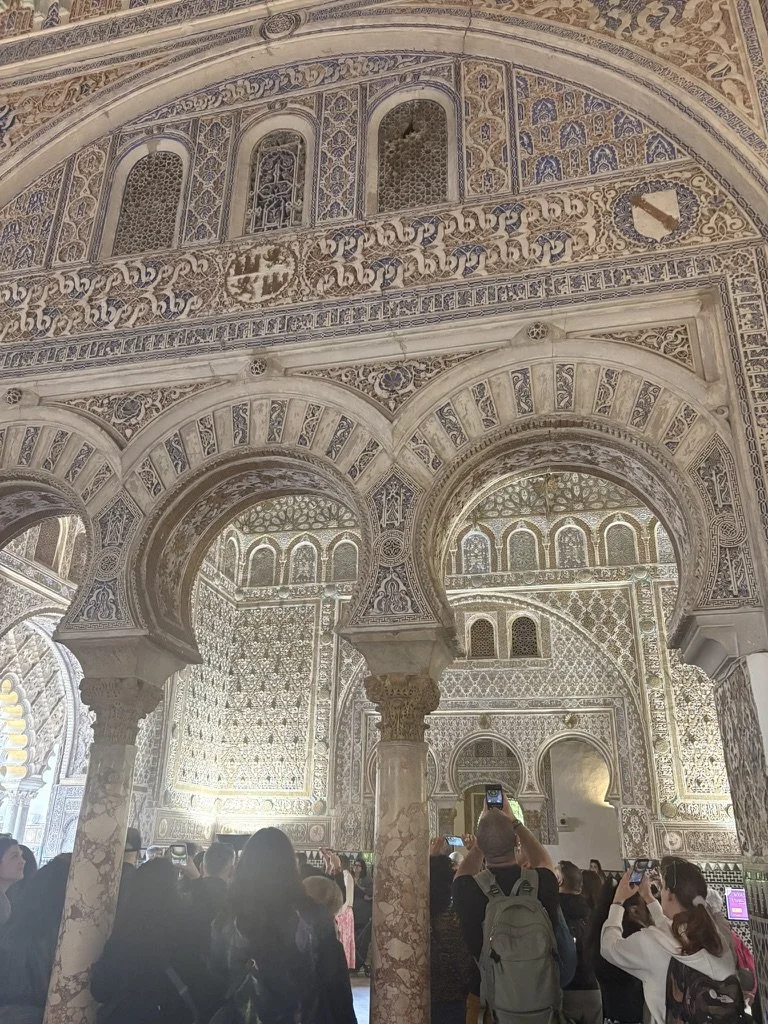
The Alcazar’s breathtaking Moorish architecture and design
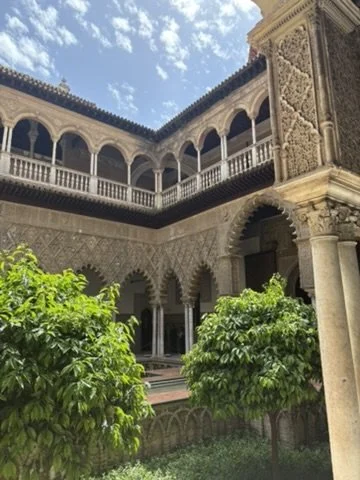
One of the Alcazar’s many courtyards
Madrid!
After a half day in Seville, we took the 2:30 pm train to Madrid arriving at 5:30 pm. After settling into our hotel, located across the street from the Thyssen Museum, we walked around the corner to a Tapas restaurant. Being that it was only 6:30, we were the only people there with the exception of a few other Americans. After dinner we walked to Plaza Major. I had been before but I wanted to take Stu (plus it was nice to walk off our tapas).
Museum day!
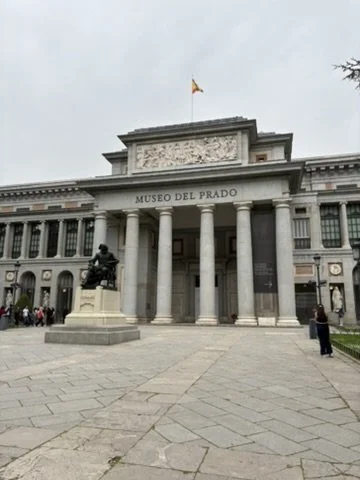
When people ask me where to go in Spain, I say, “If you like museums, go to Madrid!” Don’t get me wrong, Madrid is a fantastic city but the museums here are some of the best in the world. By the time we arrived, tickets to the Prado were sold out but our hotel was able to get a museum pass to the three major museums in the city: the Prado, Reina Sophia and the Thyssen. I had been to all three on a previous trip but was happy to return.
Stu and I went to the Prado together in the morning. We picked up the museums’ s audio tour which offered suggested itineraries for a one, two and three hour visit. We went for the three hour tour but soon became overwhelmed. I enjoy the shared experience of an audio guide with Stu but when I am alone, I tend to wander around each room until I find a piece that appeals to me and then study it for a while. We saw paintings by Goya, Velazquez and El Greco along with many old master masterpieces.
No cell phones in the Prado!
I really appreciate the Prado’s no cell phone rule. I felt like I was back in the 90s when I first started going to museums- back in the days before selfies in front of paintings. While I was unable to take a photo of the name of paintings that I want to remember, it was a breath of fresh air! The same was not true for the Thyssen and Reina Sophia.
After the Prado, we had a light lunch and then I set out to the Thyssen. The Thyssen is smaller, and less crowded, and from what I saw, while it has some old master paintings, includes more modern art. I spent about an hour there.
Museum Trifecta!
I had come this far visiting 2 museums in a day, why not a third? For the Reina Sophia, I would restrict myself to one painting only- Picasso’s Guernica. I entered the museum and made my way upstairs. It was about 4:30 pm at that point so crowds were thinning. That said, there was a group crowded around Guernica. Seeing it for a second time was just as moving as the first. I must have stood there for 30 minutes - moving from one end of the painting to another. Current events in Iran weighed heavily on me this trip and Picasso’s representation of the horror of war brought up that turmoil. It also made me think of Lebanon, the home of my ancestors. While I never met my great grandfather, who my father fondly called gramps, who left Lebanon at the age of 11 and landed in Ellis Island and eventually, Vermont, I still feel a connection to that part of the world. It pains me to think of the suffering and loss there. I believe that art allows up to tap into our deepest feelings. Guernica certainly does that for me.
Until next Time, Spain!
One of the joys of traveling in this phase of life is my awareness of how differently I approach it. When I was a junior in college, traveling in Europe was about seeing how many countries (usually cities) you could check off your list. Now I find that visiting a country just makes me want to return and see more of it. There is comfort in returning to familiar places for deeper exploration (that may be its own blog post). In any case, Spain has joined Italy and Greece for countries I want to keep exploring. I would love to explore Cordoba (which we almost stopped in on our way to Madrid but decided it deserved more time), Malaga and the Costa del Sol and iconic Rhonda and other white cities. But for now, our plan it to return to Italy this summer! Andiammo!