
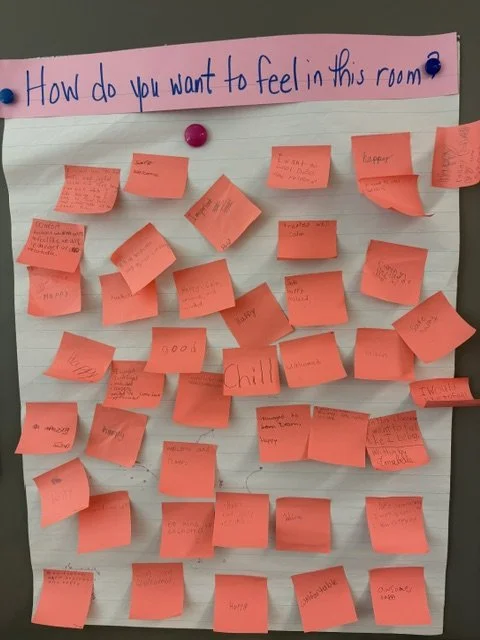
How do you want to feel in this room?
How can we create a classroom community that helps us feel that way?
On the first day of school, I place two post-its on students’ desks on which they answer these questions. I do this for two reasons:
1. I want every student to consider these questions and have a voice.
2. I want students to feel comfortable and safe participating.
Often in whole group discussions, only a few brave students share. This approach involves everyone. Afterwards, I read out a few responses and ask students what they notice. Below are responses from this year’s fifth graders.
Question 1: “How do you want to feel in this room?”
The overwhelming response was simply “happy”. Others wrote:
Safe
Comfortable
Welcomed
Included
Important
Encouraged
Joyful
Question 2: How can we create a classroom community that helps us feel that way?
Responses included:
Include everyone
Use kind words
Give compliments
Be helpful
Welcome people with a smile
Listen
Let them play
Encourage each other
These responses will serve as the foundation of our classroom “code of conduct” (I prefer that term over “rules”). Typically we write our code the next day but this year, I am considering holding off until we have another week together during which we’ll do the following:
View videos of students talking. We’ll notice and name how students in the video show that they are listening and care about what their classmates say. Then, we’ll plan for how we can do the same.
Read aloud anchor texts that embody community values.
Explore our identities as individuals, readers, writers and thinkers.
I want every student to feel a sense of belonging and joy in our literacy classroom. I want them to feel safe and comfortable being vulnerable as they share and learn. I want them to connect as they talk and genuinely listen to one another. Of course, I want them to grow as readers and writers. Each year I witness how starting with these two questions facilitates that growth and serves as the foundation of our classroom culture and community.